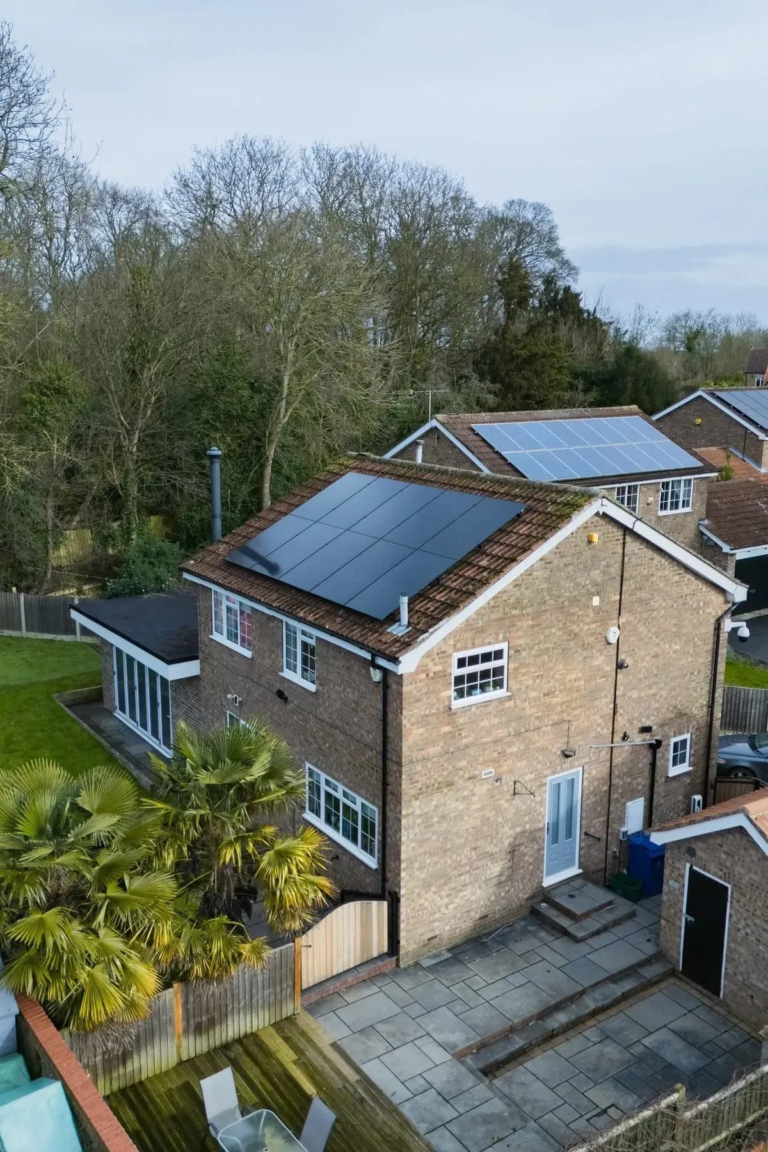
If you’re investing in solar energy, deciding where to position your battery and inverter is just as important as choosing the panels themselves. Thanks to advances in renewable energy technology, outdoor solar battery installation has become a practical, safe and increasingly popular option for homeowners and businesses.
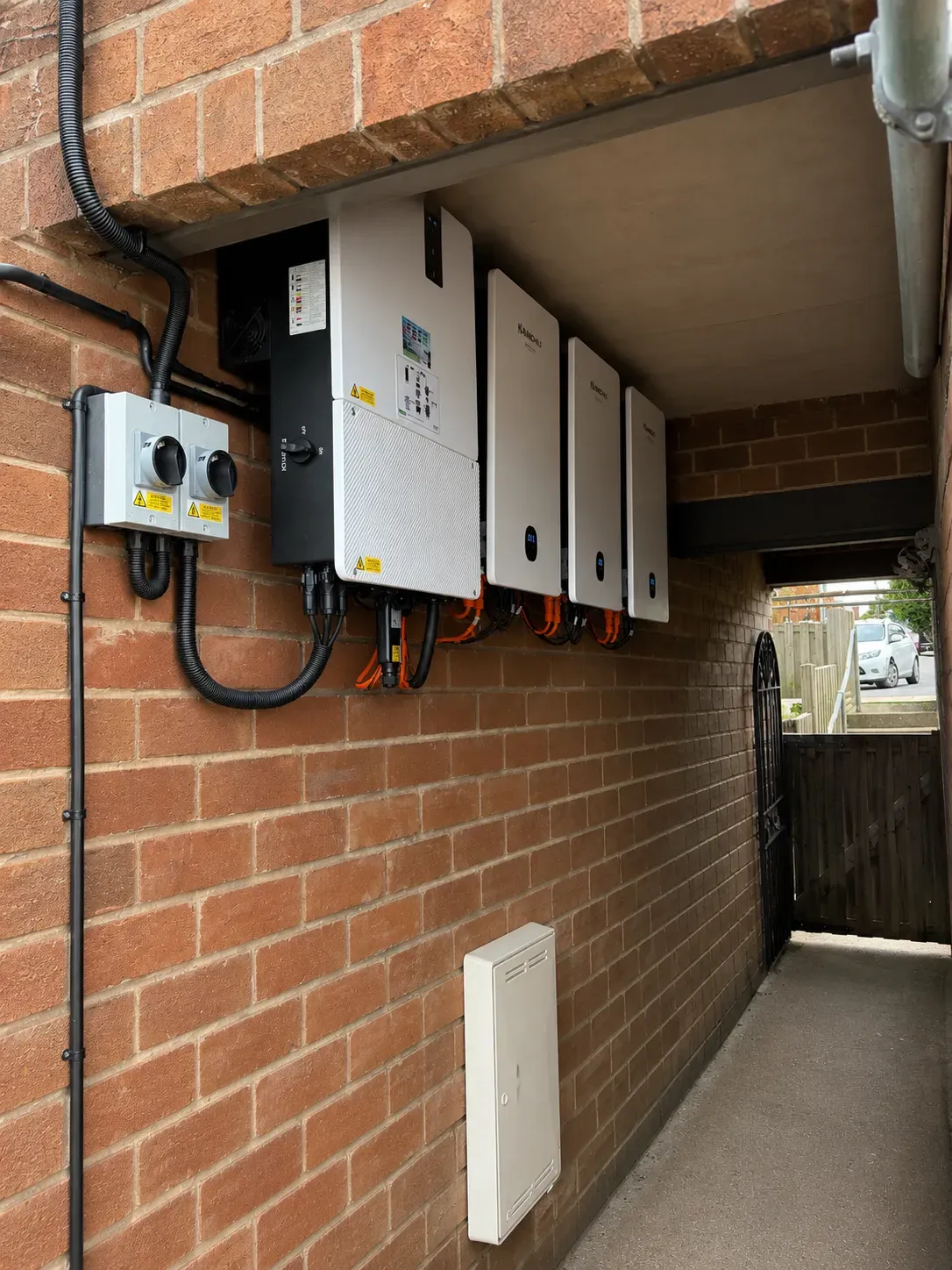
Modern home battery storage systems and solar inverters are designed to withstand the British weather while delivering reliable performance all year round. With high IP ratings, weatherproof enclosures and professional installation, external placement can provide significant advantages over indoor installations.
Why Choose Outdoor Solar Battery Installation?
Installing your battery and inverter outside your property offers several practical benefits without compromising efficiency or reliability.
Save Valuable Indoor Space
A major benefit of outdoor solar battery installation is reclaiming valuable space inside your home. Rather than using garage, utility room or cupboard space, your battery storage and inverter can be securely mounted on an external wall.
This is particularly beneficial for homes where indoor space is limited or already used for storage, appliances or vehicles.
Easier Solar Inverter Installation and Maintenance
Positioning your equipment outdoors can simplify solar inverter installation, particularly when the inverter is located close to the consumer unit or electricity meter. Shorter cable runs can improve installation efficiency while making future servicing and maintenance more straightforward.
Outdoor access also allows qualified engineers to carry out inspections with minimal disruption to your household.
Modern Equipment is Designed for Outdoor Use
Many homeowners worry that rain, frost or changing temperatures could damage solar equipment. Fortunately, today’s solar batteries and inverters are specifically engineered for external environments.
Leading manufacturers produce weather-resistant equipment that is tested to perform reliably in a wide range of conditions, making outdoor installation an excellent long-term solution.
What is an IP Rating?
When comparing solar equipment, you’ll often see references to an IP rating.
IP stands for Ingress Protection, which measures how well electrical equipment is protected against dust and water.
The rating consists of two digits:
- The first digit indicates protection against dust and solid objects.
- The second digit measures protection against moisture and water.
Common IP Ratings for Solar Equipment
Many modern solar systems feature high levels of environmental protection, including:
- IP65 solar inverter – Fully protected against dust and resistant to low-pressure water jets from any direction.
- IP66 – Complete dust protection with increased resistance to powerful water jets.
- IP67 – Complete dust protection and protection against temporary immersion in water under specified conditions.
An IP65 solar inverter is one of the most common choices for residential installations and provides excellent protection for year-round outdoor use when installed according to the manufacturer’s guidelines.
Flexible Installation Options
Every property is different, and outdoor installation offers greater flexibility when designing your solar system.
External wall mounting may be the ideal solution if:
- Indoor wall space is limited
- Garage space is needed for vehicles or storage
- The property layout makes indoor installation difficult
- You want to minimise disruption inside your home
Professional installers will always assess the most suitable location to maximise efficiency while ensuring adequate ventilation and manufacturer-recommended clearances.
A Cleaner, Less Cluttered Home
Choosing external installation helps keep technical equipment out of living areas and utility spaces. Your home battery storage system remains easily accessible while maintaining a cleaner and less cluttered appearance inside your property.
Safety Comes First
Modern outdoor solar systems are designed with safety as a priority.
Qualified installers use weatherproof electrical connections, secure mounting systems and manufacturer-approved installation methods. Equipment is positioned to allow adequate airflow while avoiding unnecessary exposure to extreme conditions wherever possible.
When professionally installed, outdoor batteries and inverters comply with current electrical regulations and manufacturer specifications.
Is Outdoor Solar Battery Installation Right for Your Home?
For many homeowners, the answer is yes.
Modern home battery storage systems and inverters are built for external environments, making outdoor installation a safe, durable and space-saving solution. However, every property is different, and the ideal location depends on factors such as available space, cable routes, shading and the specific equipment selected.
An experienced solar installer can recommend the most suitable position to maximise performance and longevity.
Final Thoughts
Choosing outdoor solar battery installation offers numerous benefits, including saving indoor space, simplifying maintenance and providing greater installation flexibility.
With weatherproof equipment, robust IP65 solar inverter protection and professional installation, homeowners can enjoy reliable renewable energy performance for years to come.
If you’re considering a solar installation or upgrading your existing system with home battery storage, speak to a qualified installer who can recommend the best location for your battery and inverter while ensuring full compliance with manufacturer guidance and UK electrical standards.